Blog
Aipu Safe Box: Advancing Fire Resistance Standards
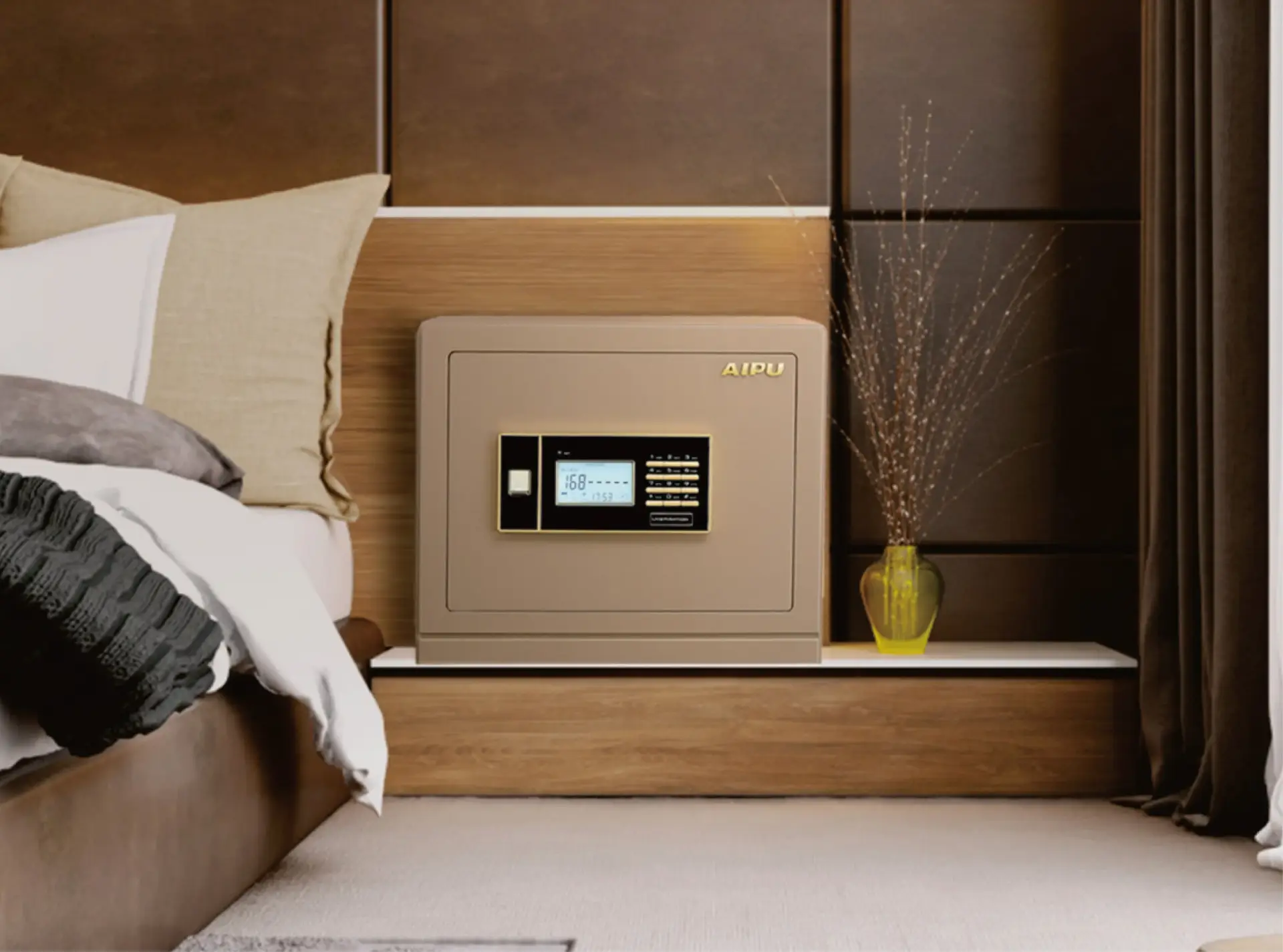
Aipu Safe Box: Advancing Fire Resistance Standards
How China‘s Leading Safe Brand Is Redefining Fire Protection for a Safer Tomorrow
When a fire strikes, every second counts. For the items that matter most—birth certificates, family heirlooms, irreplaceable business records—the difference between preservation and total loss often comes down to one thing: whether they were stored in a truly fire-resistant safe.
But what does “fire-resistant” actually mean? And how can consumers know which safes will truly protect their valuables when the flames arrive?
For decades, China lacked a comprehensive, independently verifiable national standard for fire resistance in safes. That changed on October 1, 2026, when GB/T 16810-2026—Tests and Requirements for Fire Resistance of Safe Cases— officially takes effect, marking a pivotal moment for China‘s security industry.
At the forefront of this historic advancement stands Aipu Safe Box.
As a key drafting unit, the host of the standard’s revision launch symposium, and the organizer of a landmark fire resistance certification workshop in collaboration with the Tianjin Fire Research Institute of MEM, Aipu isn‘t just complying with new regulations—it’s actively shaping the future of fire protection in China. This blog explores how Aipu is advancing fire resistance standards, what these changes mean for the industry, and why Aipu‘s fire-resistant safes represent the gold standard for protecting what matters most.
📜 Part 1: The Evolution—From GB/T 16810-2006 to GB/T 16810-2026
Fire protection standards don‘t exist in a vacuum. They evolve alongside technology, materials science, and a deeper understanding of real-world fire behavior.
The original standard, GB/T 16810-2006, served as China’s benchmark for safe fire resistance for nearly two decades. It established the foundational classification system, testing protocols, and pass/fail criteria that enabled manufacturers to develop and consumers to evaluate fire-resistant safes. However, as fire safety technology advanced globally and as consumer expectations grew, the need for a comprehensive revision became increasingly urgent.
Enter GB/T 16810-2026.
Issued by the National Administration for Market Regulation on March 31, 2026, and scheduled for implementation on October 1, 2026, the new standard represents a significant leap forward in testing rigor, classification clarity, and technical requirements.
While the full text of the revised standard is not yet publicly available, industry experts anticipate several key enhancements based on the scope of the revision work and international benchmarking:
- Refined testing protocols aligned with global best practices, including more precise temperature monitoring and extended exposure durations
- Expanded classification systems to differentiate between levels of fire protection, making it easier for consumers to select appropriate products
- Stricter performance thresholds for internal temperature rise, ensuring that protected items—particularly paper documents—remain below critical carbonization temperatures
The revision also integrates feedback from manufacturers, testing institutions, and end-users gathered during the extensive stakeholder consultation process that unfolded over multiple years. Through meetings, workshops, and technical discussions, the industry coalesced around a shared vision: a standard that would elevate the entire sector, not merely codify existing practices.
🔬 Part 2: Aipu‘s Role in Standard Advancement
Standards don‘t write themselves. Behind every national technical standard is a collaborative effort involving research institutions, industry associations, and leading manufacturers who bring real-world expertise to the table. For GB/T 16810-2026, Aipu occupied a central role at every critical juncture.
Hosting the National Standard Revision Launch Symposium
On October 31, 2024, a landmark event unfolded at Aipu’s headquarters in Ningbo, China. As the nation‘s leading safe box enterprise, Aipu served as the host and primary organizer of the National Recommended Standard “Tests and Requirements for Fire Resistance of Safe Cases” Revision Launch Symposium.
The symposium brought together a distinguished assembly of experts, including:
- Li Baoli, Director and Research Fellow of the Second Testing Department of the Tianjin Fire Research Institute‘s Testing Center
- Li Xiquan, Deputy Director and Associate Research Fellow of the same department
- Cao Jun, Chairman of Aipu
- Cao Jie, General Manager of Aipu
- Over twenty representatives from various enterprises across China’s security industry
The meeting began with an introduction of the preliminary preparations for the revision project, followed by a formal reading of the draft standard content. Attendees then engaged in an extensive and free-ranging discussion.
The deliberations focused on several core technical areas:
| Discussion Topic | Key Considerations |
|---|---|
| Fire resistance performance requirements | Defining appropriate thresholds for different product classifications |
| Specimen conditions and preparation | Standardizing test sample size, conditioning, and handling |
| Test apparatus and instrumentation | Ensuring accuracy and repeatability across testing facilities |
| Standard fire resistance testing | Aligning with the standard time-temperature curve |
| Fire resistance and drop testing | Evaluating performance after impact—a key differentiator in real-world fires |
These open, collaborative discussions ensured that the revised standard would reflect both cutting-edge research and practical manufacturing realities.
Co‑Organizing the Fire Resistance Certification Workshop
The standard revision wasn‘t the end of Aipu’s involvement—it was only the beginning. On March 21, 2026, Aipu once again joined forces with the Tianjin Fire Research Institute of the Ministry of Emergency Management (MEM) to co‑host the Insurance Cabinet Fire Resistance Certification Workshop at its Ningbo facilities.
The workshop assembled a cross‑section of stakeholders: fire research scientists, industry alliance representatives, and manufacturing experts from more than ten Ningbo-based safe box and lock enterprises, including Shengwei International and Shenzhou Lock Industry. Their shared mission: to explore how the revised GB/T 16810 standard could be effectively implemented, certified, and scaled across the industry.
Experts from the Tianjin Fire Research Institute delivered detailed technical presentations covering:
- Standard updates — What changed and why
- Factory inspection protocols — Ensuring manufacturing consistency
- Technical assessment methodologies — Evaluating compliance
- Practical testing procedures — Real‑world implementation
From standard updates and factory inspections to technical assessments and hands‑on testing, every critical dimension of fire resistance certification was examined in depth.
Perhaps most tellingly, the on‑site demonstration at Aipu‘s showroom allowed attendees to witness firsthand the company’s latest fire‑resistant technologies: smart safes integrating both fireproofing and anti‑theft features, products utilizing novel fire‑resistant materials, and innovative structural designs that push the boundaries of what‘s possible.
Industry experts were effusive in their praise. Zhao Ziyu, Secretary‑General of the Hardware Industry Technology Innovation Strategic Alliance, emphasized in his address that the advancement of unified certification standards is essential for both consumer safety and industrial upgrading. Meanwhile, Aipu General Manager Cao Jie pledged to continue investing heavily in fire protection R&D, rigorously implementing national standards, and setting a safety benchmark for the entire industry.
🔥 Part 3: The Technology—What Makes a Safe Truly Fire‑Resistant
Great standards are built on great technology. Aipu’s leadership in fire resistance is rooted not just in its policy engagement, but in the tangible engineering and materials science embedded in every fire‑resistant product it manufactures.
How Fire‑Resistant Safes Work
At its simplest, a fire‑resistant safe is designed to do one thing: maintain its internal temperature below the point at which its contents are damaged, while the exterior is exposed to extreme heat. For paper documents, that critical temperature is approximately 177°C—the point at which paper begins to carbonize and disintegrate.
To achieve this, fire‑resistant safes typically employ a multi‑layer construction:
- Outer steel shell — Provides structural integrity and initial heat deflection
- Insulating core — Generally composed of materials like mineral wool, perlite, or specialized fire‑resistant concrete that absorbs and dissipates heat energy
- Inner steel lining — Forms the final barrier protecting the stored contents
Aipu‘s fire‑resistant safes feature 12mm professional‑grade fireproof layers, an industry‑leading specification that far exceeds basic requirements. This substantial thermal barrier is engineered to withstand external temperatures exceeding 1,000°C while keeping internal compartments within safe limits.
A Track Record of Exceptional Performance
Independent testing has confirmed the effectiveness of Aipu‘s approach. Products have demonstrated the ability to effectively block fire and sprinkler ingress for 1.5 hours, providing critical protection during the most vulnerable period of a residential or commercial fire.
That 1.5‑hour window is no accident. That is often the gap between the arrival of emergency services and the point at which fire containment is achieved. That 1.5‑hour window can mean everything.
Dual‑Purpose Protection
Beyond fire resistance, Aipu’s premium safe series incorporate complementary safety features that make them ideal for comprehensive asset protection:
- 12mm professional fireproof layers tested against 1000°C furnace exposure
- Anti‑theft construction with high‑strength alloy steel and multiple locking bolts
- Anti‑corrosion finishes resistant to environmental degradation
- Advanced locking mechanisms combining biometric fingerprint recognition with digital code access
The result is a product that doesn‘t force customers to choose between fire protection and theft deterrence—they get both in a single integrated solution.
Materials Innovation
Aipu’s R&D focus extends to the very materials that make fire resistance possible. The company‘s commitment to exploring novel fire‑resistant materials and advanced structural designs has been repeatedly highlighted by industry experts as a model for the broader industry. By investing in materials science, Aipu isn‘t just keeping pace with the standard—it’s helping to define what‘s possible.
🌍 Part 4: Global Benchmarking—Aligning with International Standards
Fire doesn’t respect borders, and neither should fire protection standards. Aipu‘s approach to fire resistance has always been informed by international best practices, ensuring that its products meet not only Chinese national standards but also the rigorous requirements of global markets.
UL 72: The American Benchmark
The UL 72 standard, developed by Underwriters Laboratories, is among the most widely recognized fire resistance certifications worldwide. It categorizes safes based on the duration of fire exposure they can withstand—from ½ hour up to 4 hours—and the temperature maintained inside.
Key UL 72 classifications include:
| Classification | Fire Exposure Duration | Furnace Temperature | Internal Temperature Limit | Primary Use |
|---|---|---|---|---|
| Class 350 – 1 Hour | 1 hour | 927°C | Below 177°C (350°F) | Paper documents |
| Class 350 – 2 Hours | 2 hours | 1010°C | Below 177°C | Paper documents |
| Class 350 – 4 Hours | 4 hours | 1093°C | Below 177°C | High‑volume records |
| Class 125 / 150 | Varies | Similar exposure | 65°C (150°F) or below | Digital media |
UL 72 tests do not merely heat a safe and check the results. They subject safes to extreme temperatures for the full designated period, then allow them to cool naturally within the furnace. The entire evaluation process can extend well beyond 100 minutes, simulating the complex thermal environment of a real‑world fire more accurately than a simple heat‑and‑quit approach.
Crucially, the Class 350 rating, which requires that internal temperatures remain below 177°C, is specifically designed to protect paper documents from carbonization. This 177°C threshold is the effective death line for paper—exceed it, and documents begin to disintegrate. Meet it, and they survive.
EN 1047‑1: The European Standard
Europe’s equivalent fire resistance standard, EN 1047‑1, takes a similarly rigorous approach. It classifies safes based on their ability to protect paper documents (S Class) and digital media (D Class) during extended fire exposure, including both heating and impact testing.
Aipu‘s Global Certifications
Aipu’s products carry multiple overseas certifications, including UL, CE, and ETL, demonstrating the company‘s ongoing commitment to international safety standards.
This global compliance matters for several reasons:
- Export readiness — Aipu’s products can be sold with confidence in markets from North America to Europe
- Consumer reassurance — International certifications provide third‑party validation accessible to customers worldwide
- Technical expertise — Maintaining multiple certifications forces continuous improvement across design, materials, and manufacturing
The company‘s fire‑resistant offerings span a broad range of product types, including gun safes, fireproof safes, depository safes, hotel safes, and fingerprint safes—each engineered to meet the fire protection needs of its specific use case.
International Fire Testing Protocols
It’s worth understanding how fire tests actually work. The ISO 834 standard fire curve—widely used in fire testing globally—calls for furnace temperatures to reach:
- 700°C within the first 10 minutes
- 820°C by the 30‑minute mark
- 925°C after 60 minutes
Throughout the test, thermocouples monitor multiple points on and within the safe‘s surfaces, verifying that the internal compartment remains within safe temperature thresholds.
✅ Part 5: What This Means for Consumers
If you’re reading this and wondering: “I‘m just a homeowner. Do I really need a certified fire‑resistant safe?”—the answer depends on what you plan to store inside.
Paper Documents
Birth certificates, property deeds, marriage licenses, wills, insurance policies—these are not replaceable. The originals carry legal weight that photocopies cannot replicate. If you store these items in a standard anti‑theft safe, they will be protected from burglars but remain vulnerable to fire.
A certified fire‑resistant safe, particularly one meeting Class 350 standards (or equivalent), ensures that even if a fire engulfs your home, these documents will remain intact and legible.
Digital Media
External hard drives, USB flash drives, backup disks—these represent your digital life: years of family photos, financial records, and business data. Digital media is even more vulnerable to heat damage than paper, with failure thresholds far lower than 177°C.
For digital media, look for safes tested to UL Class 125 or 150 standards, which require internal temperatures to remain below 65°C (150°F) to preserve magnetic and solid‑state storage integrity.
Valuables and Sentimental Items
Jewelry, watches, cash, collectibles—these can be insured for their monetary value, but insurance cannot replace sentimental worth. Items like family heirlooms, antique jewelry with unique provenance, or irreplaceable artwork deserve the added protection of fire‑resistant storage.
What to Look For When Buying
- Certification marks — Look for compliance with GB/T 16810, UL 72, or international equivalents
- Fire rating duration — 1‑hour minimum for most residential applications; 2‑hour for more comprehensive protection
- Internal temperature specification — 177°C (350°F) or below for paper; lower for digital media
- Construction materials — High‑density fireboard, ceramic fiber, or proprietary fire‑resistant composites
- Independent testing verification — Certificates from recognized testing bodies add credibility
🏢 Part 6: Real‑World Impact—Who Trusts Aipu’s Fire‑Resistant Safes
Banks and Financial Institutions
For financial institutions, fire protection is not optional—it’s non‑negotiable. Aipu has developed professional‑grade versions of its safes specifically for banks and jewelry stores. These specialized models incorporate additional security features layered on top of robust fire resistance to address the uniquely demanding environments of high‑value financial operations.
Jewelry Retailers
Diamonds may be forever, but their settings and surrounding packaging are not. Jewelry retailers face dual threats: targeted burglary and the ever‑present risk of shop fires, whether from electrical faults, neighboring incidents, or arson. Aipu‘s fire‑resistant safe solutions ensure that inventory remains protected no matter which threat materializes first.
Luxury Homes and Villas
High‑net‑worth individuals increasingly demand comprehensive security solutions for their residences. Aipu’s fire‑resistant safes, integrated with biometric access controls and smart monitoring systems, offer a level of protection commensurate with the value of the assets they safeguard.
🧭 Part 7: The Road Ahead—Aipu‘s Future in Fire Protection
The implementation of GB/T 16810-2026 is not the end of the journey—it’s a milestone along an ongoing path of improvement and innovation.
Continued R&D Investment
Aipu‘s commitment to fire protection research and development is unequivocal. The company operates a dedicated Aipu Safe Technology Research Center and a specialized product testing laboratory, institutions that continuously explore new fire‑resistant materials, structural configurations, and manufacturing processes.
Deeper Institutional Collaboration
The partnership with the Tianjin Fire Research Institute of MEM represents a model for industry‑research collaboration that yields tangible results. Both organizations have committed to deepening their cooperation moving forward, with the shared goal of promoting technological innovation and standard across China’s security industry.
With such integrated efforts—spanning research, manufacturing, training, and certification—the industry will continue to build momentum, benefiting manufacturers, installers, and ultimately the end‑users who rely on these products for their most critical asset protection needs.
Toward an Integrated Security Ecosystem
Aipu‘s vision extends beyond standalone fire‑resistant products. The company is actively developing smart fire‑resistant systems that integrate with broader home and commercial security networks. Imagine a safe that not only withstands fire but also alerts homeowners, emergency services, and security monitoring centers the moment flame or extreme heat is detected nearby. That future is closer than many realize, and Aipu is helping to build it.
Setting Higher Standards for the Industry
Perhaps most significantly, Aipu’s leadership in fire protection standardization sends a powerful message to the broader manufacturing community. Active participation in standard-setting—not passive compliance—is both an obligation and an opportunity for industry leaders.
The company‘s willingness to open its doors to competitors, share technical insights, and host collaborative workshops demonstrates that Aipu understands a fundamental truth: when industry standards rise, everyone benefits—manufacturers, distributors, installers, and end‑users alike.
📌 Conclusion: Securing What Matters—Today and Tomorrow
Fire is unpredictable, indiscriminate, and devastating. It can reduce a lifetime of memories to ash in minutes. But fire is also manageable—not through hope or luck, but through engineering, standards, and the dedicated efforts of companies that take their responsibility seriously.
GB/T 16810-2026, which takes effect in October 2026, provides China with a modern, rigorous, and verifiable framework for evaluating fire resistance in safes. That framework will help consumers make informed choices, help regulators enforce meaningful standards, and help manufacturers like Aipu continuously improve their products.
Yet standards alone accomplish nothing without industry leaders willing to champion them.
Aipu‘s role in hosting the revision launch symposium, co-organizing the certification workshop, and investing in ongoing R&D is not merely a matter of corporate responsibility—it is leadership in action. By engaging deeply with the standard-setting process, sharing expertise with competitors, and opening its facilities for professional scrutiny, Aipu has demonstrated that true industry leadership is built on collaboration, transparency, and a shared vision for public safety.
For consumers, the message is clear: when you choose an Aipu fire‑resistant safe, you’re not just buying a steel box. You‘re choosing a product shaped by decades of expertise, validated by rigorous testing, manufactured to meet the highest national and international standards, and backed by a company that helped write the rulebook for fire protection in China.
That’s what it means to advance fire resistance standards.
That‘s what Aipu is doing—every single day.
🔐 Choose Aipu. Choose Knowing What’s Inside Will Still Be There Tomorrow.
📞 Contact Aipu Safe Box
For more information about Aipu‘s fire‑resistant products, partnership opportunities, or to schedule a private consultation:
📧 E‑mail: info@aipusafebox.com
📞 Customer Service Hotline: 4008-874-538 (24 hours / 7 days)
🌐 Official Website: www.aipusafebox.com